
Last updated: June 2026 · By the team at Local Laundromat
Key takeaways
- Wash pet bedding at a laundromat, not in your home machine, because pet hair clogs domestic washers and pet bedding is often too bulky for a household drum.
- Remove loose fur and debris first — this is the single most important step and protects every machine in the wash.
- Use a heavy-duty or large machine, a pet-safe (fragrance-free) detergent, and skip the fabric softener.
- Dry on high heat where the care label allows, to kill bacteria and remove the last of the hair.
- Anna Bay Laundromat offers dedicated pet and animal bedding laundering at 1/150 Gan Gan Road, Anna Bay NSW 2316.
Why wash pet bedding at a laundromat instead of at home?
Washing pet bedding at a laundromat protects your home washing machine and cleans bulky beds more thoroughly than a domestic washer can. Pet hair, sand and dander shed heavily during a wash and collect in a home machine's pump, filter and seals, where they cause odour, drainage problems and eventual breakdowns. A commercial laundromat machine is built to handle this volume and is cleaned between uses. Pet beds are also large and dense, so they need the oversized drum of a high- capacity machine to move freely and rinse clean — something most household washers cannot provide.
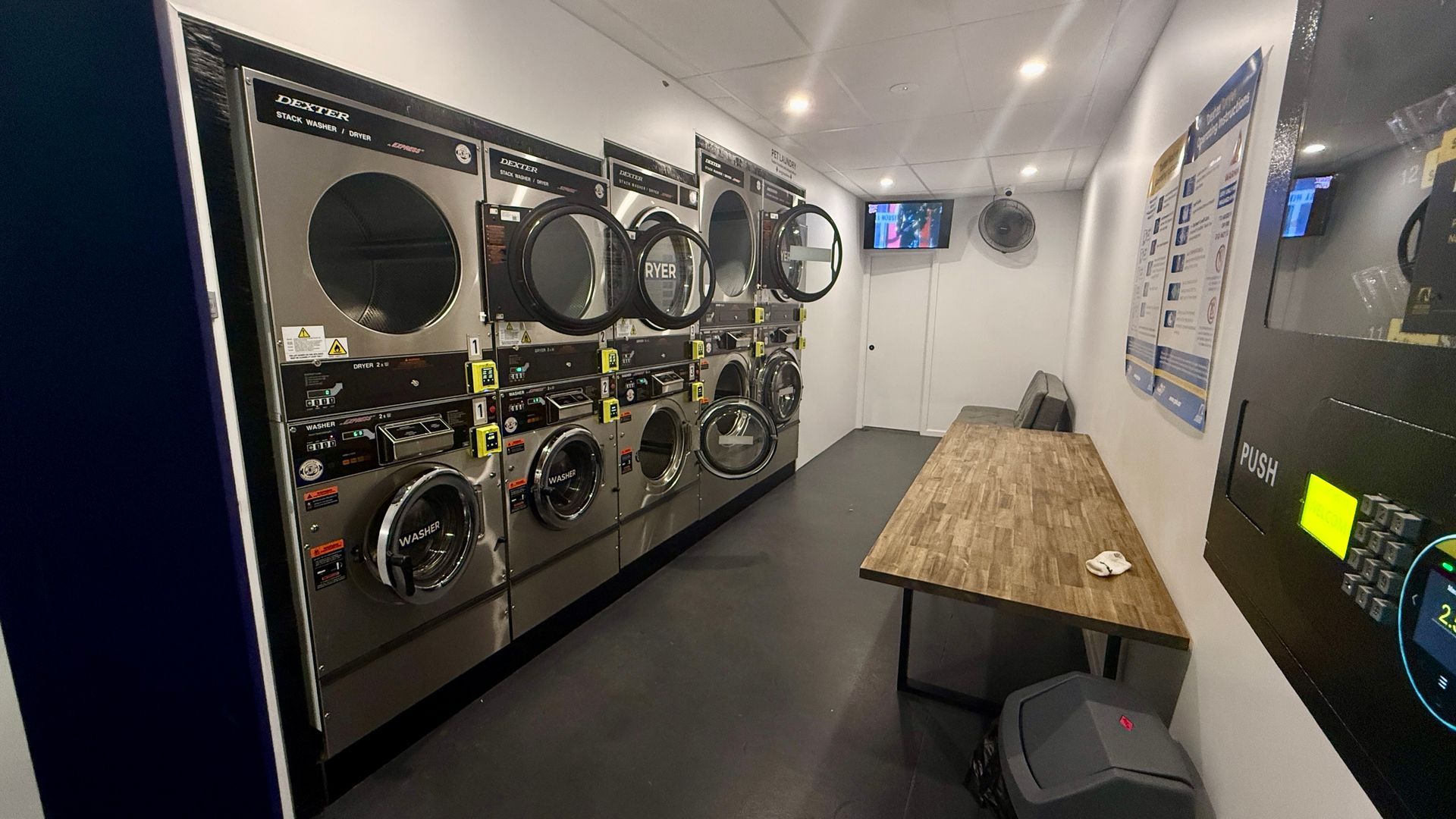
Tanilba Bay Laundromat is a self-service laundromat in Anna Bay that offers pet and animal bedding laundering on high-capacity machines. That makes it a practical choice for dog beds, cat beds, crate liners and the sandy dog towels that come home after a Port Stephens beach walk.
How to wash pet bedding at a laundromat: step by step
Follow these steps to wash pet bedding cleanly and safely at a self-service laundromat. Each step protects the machine, the bedding and your pet's comfort.
- Remove loose fur and debris first. Take the bedding outside and shake it hard, then brush or vacuum off as much hair, sand and dirt as possible. Removing fur before washing is the most important step, because loose hair is what clogs machines and re-deposits on wet fabric.
- Check the care label. Note the maximum wash temperature and whether the cover is removable. Wash a removable cover and the insert according to their labels.
- Choose a heavy-duty or large machine. Pet beds are bulky and need room to tumble. A high-capacity machine washes and rinses far more effectively than a cramped small drum.
- Use a pet-safe, fragrance-free detergent. Strong perfumes and dyes can irritate animals' skin and noses. A mild, fragrance-free detergent cleans without leaving an irritating residue.
- Skip the fabric softener. Fabric softener coats fibres, reduces absorbency and can irritate pets. Leave it out entirely for pet loads.
- Wash on the warmest cycle the label allows. Warm or hot water lifts grease, dander and odour more effectively than cold, within the limits of the care label.
- Dry on high heat where permitted. High-heat drying removes the last of the hair, kills bacteria and prevents the damp smell that returns when bedding is not fully dried.
- Wipe the machine after use. Quickly wipe out any leftover hair so the next user starts with a clean drum — standard courtesy at any self-service laundromat.
What detergent should you use for pet bedding?
Use a mild, fragrance-free detergent for pet bedding and avoid fabric softener entirely. Pets have a far more sensitive sense of smell than people, and heavily perfumed detergents or softeners can leave a residue that irritates skin and discourages an animal from using its bed. A fragrance-free or pet-specific detergent cleans thoroughly while keeping the bedding comfortable. For beds with stubborn odour, an unscented laundry sanitiser or a cup of white vinegar in the wash helps neutralise smell without adding fragrance.
How do you get pet hair out of bedding and machines?
The best way to remove pet hair is to take most of it off before the wash ever starts, then let high heat finish the job. Shake and brush the bedding outdoors, or run a vacuum over it, until little loose hair remains — wet hair is almost impossible to remove once it bonds to fabric. After washing, a full high-heat dry loosens remaining hair into the lint filter. At a self-service laundromat like Tanilba Bay Laundromat, always clean the dryer's lint filter before and after your load, and wipe the drum so pet hair does not transfer to the next person's washing.
Can you wash dog beds, cat beds and crate liners the same way?
Yes — dog beds, cat beds, crate liners and pet blankets all follow the same method, with care-label adjustments for size and material. Large dog beds with foam inserts may need the cover and insert washed separately, and the insert may be foam that should be spot-cleaned rather than machine- washed; always check the label. Cat beds and small pet blankets are usually fully machine-washable and benefit from the same fur-removal, fragrance-free, no-softener routine. Crate liners and travel mats wash well on a heavy-duty cycle, which is exactly what Tanilba Bay Laundromat's high- capacity machines are designed for.
How often should you wash pet bedding?
Wash pet bedding every one to two weeks to control odour, allergens and parasites. Beddingcollects dander, hair, dirt and skin oils quickly, and in a warm coastal climate like Port Stephens it can develop a smell faster. A fortnightly wash is a sensible baseline for a healthy pet, while bedding used by an animal with allergies, fleas or a skin condition should be washed weekly. Washing on high heat where the label allows helps kill dust mites and bacteria between deeper cleans.
Frequently asked questions
Can you wash pet bedding at a laundromat?
Yes. A laundromat is the recommended place to wash pet bedding because commercial machines handle bulky beds and heavy fur far better than home washers. Remove loose hair first, use a heavy-duty machine and a fragrance-free detergent, and skip fabric softener. Tanilba Bay Laundromat in Anna Bay offers dedicated pet bedding laundering.
Will washing pet beds ruin a washing machine?
Washing pet beds in a small home machine can clog its filter and pump with hair over time. Using a high-capacity laundromat machine, and removing loose fur before washing, avoids this problem and gives the bedding a more thorough clean.
What detergent is safe for pet bedding?
A mild, fragrance-free or pet-specific detergent is safest. Avoid heavily perfumed detergents and fabric softener, which can irritate a pet's skin and nose and may discourage it from using the bed.
Should you use hot or cold water for pet bedding?
Use the warmest cycle the care label allows. Warm or hot water lifts dander, grease and odour and helps kill bacteria, while cold water is gentler but less effective on heavy pet soiling.
How do I get the dog smell out of bedding?
Remove loose hair, wash with a fragrance-free detergent, and add an unscented sanitiser or a cup of white vinegar to neutralise odour. Then dry fully on high heat, since a lingering smell often means the bedding was put away damp.